List of Exhibits (Scroll by tapping)
The World of Noh Costumes and Masks
At the Yarai Noh Theater, we are specially displaying traditional Noh costumes and masks. This art form, passed down over centuries, invites viewers into a story beyond time and space, thanks to its delicate costumes and expressive Noh masks. We hope you will appreciate the deep history and cultural value of Noh through this exhibition.
The images posted on this site have been specially provided to showcase the valuable cultural assets of the Yarai Noh Theater. Unauthorized copying or secondary use of these images is strictly prohibited under copyright law. We ask that you respect the tradition and culture of Noh and limit your viewing of these images to personal use only.
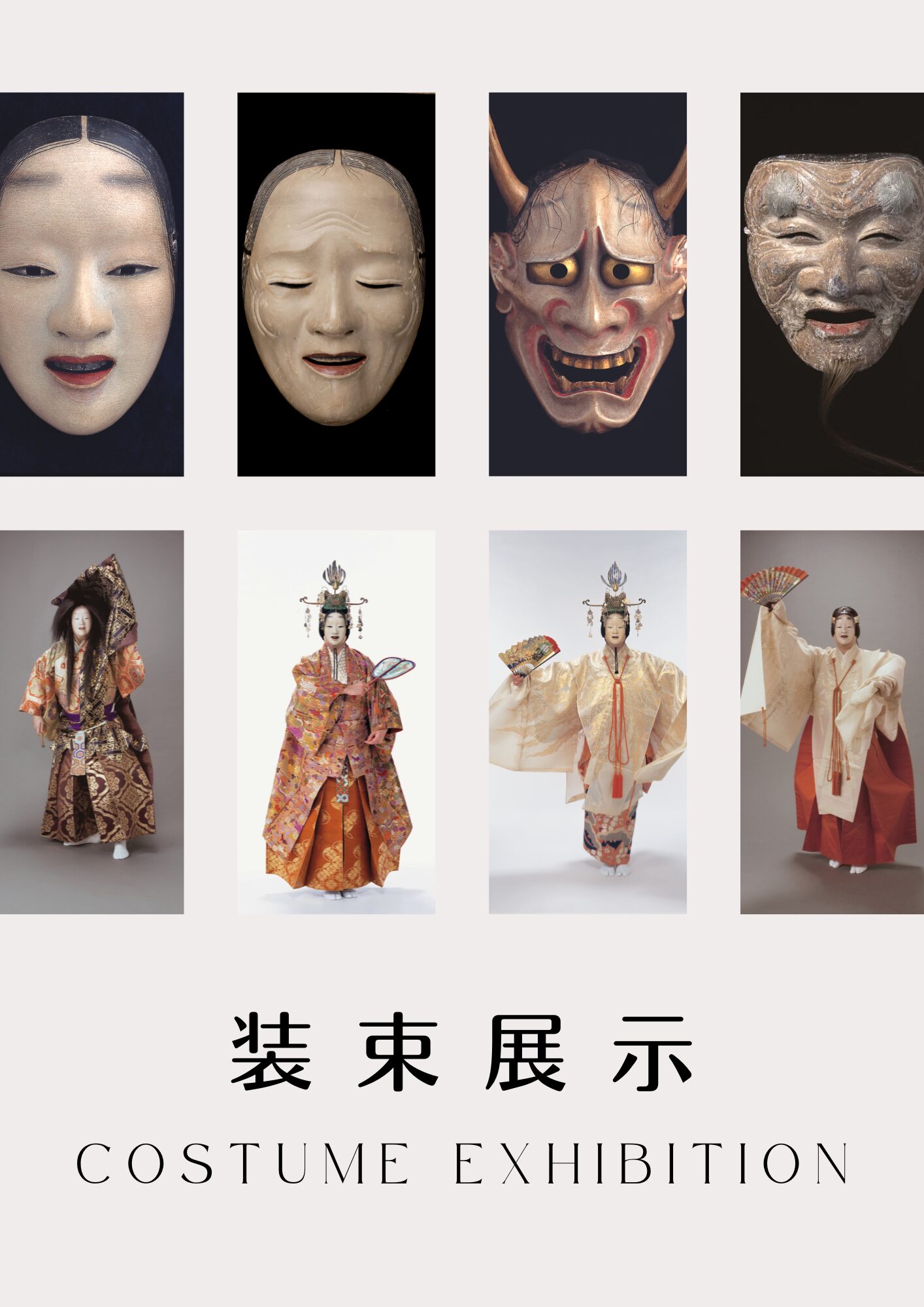
List of Exhibits (Scroll by tapping)
No.18
Hangiri
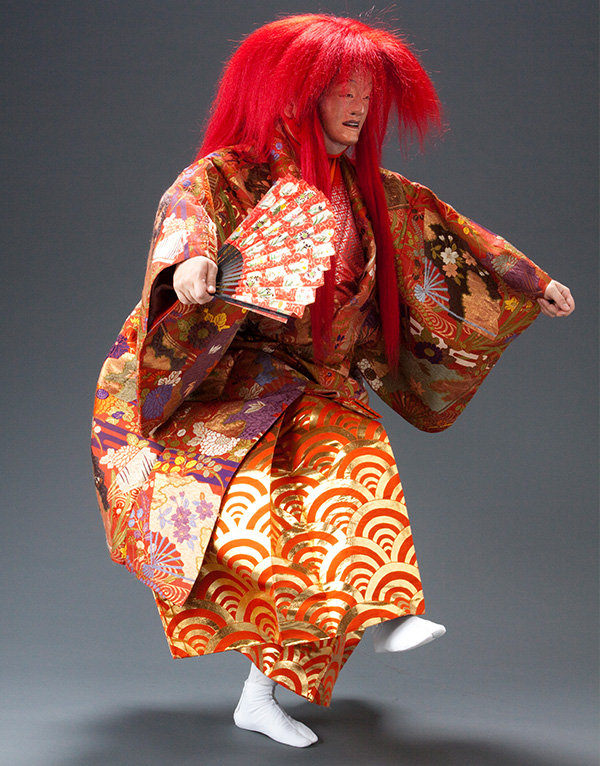
Red with Blue Wave Pattern (Akaji Seigaihamoyo Hangiri)
A repeating pattern of semicircular waves representing crests. It represents calm waves and is a special half-cut hakama used for the performance “Shoujo Midare.” Nowadays, the Wi-Fi mark seems to be similar.
*This is a description of the displayed costume. It is different from the photo. (Photo: Example of costume used in Noh play “Shoujo”)
No.19
Hangiri
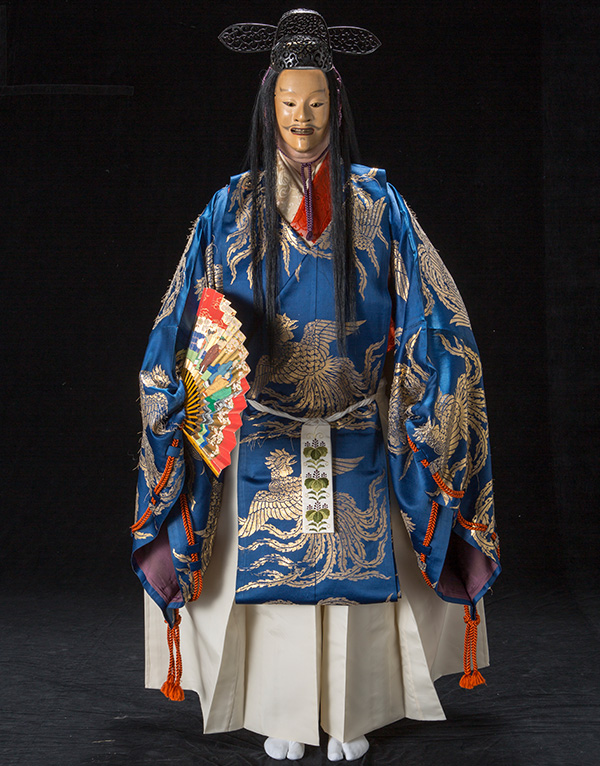
Navy blue phoenix pattern lined hunting robe(Konji Hōō Awasekariginu)
Karinu was originally an outdoor garment worn by aristocrats, but in Noh it is worn by high status such as emperors, gods, and ministers. This kariginu, embroidered with a phoenix in gold thread, is worn by the Deity of Sumiyoshi in “Takasago” and the Emperor.
* This is a description of the displayed costume. It is different from the photo. (Photo: Example of costume used in Noh play “Takasago”)
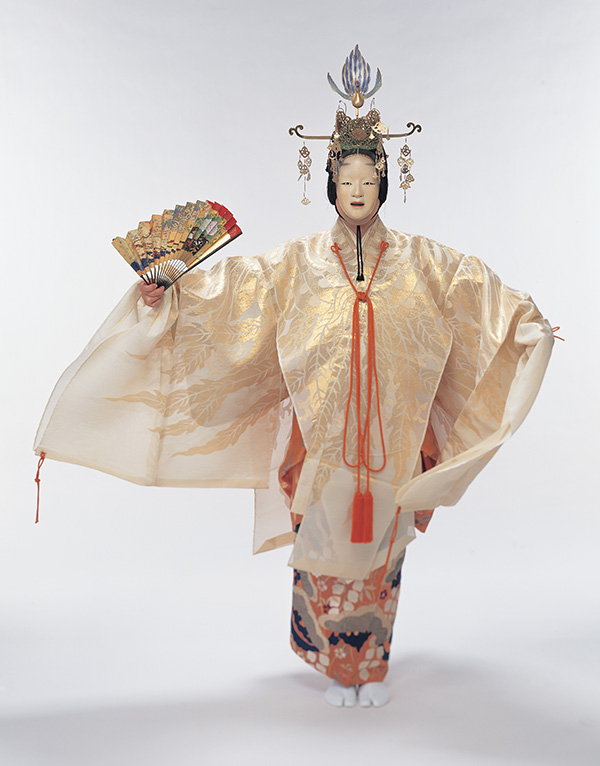
No.20
Nuihaku
Red with Pine and Wisteria needlework(Akaji Matsu-Fuji Nui-Haku)
Nuihaku is a technique that creates a three-dimensional effect with patterns created by thread embroidery (nui) and gold leaf (haku). In most cases, the upper half of the garment is removed and worn as a waist wrap(koshimaki).
In “Hagoromo,” a heavenly maiden whose clothes have been stolen appears wearing only a waist wrap. The image of wisteria hanging from a pine tree is a traditional auspicious design that is often depicted in waka poetry and literature. When used in the Hagoromo, it evokes the image of Miho no Matsubara.
* This is a description of the displayed costume. It is different from the photo. (Photo: Example of costume used in Noh play “Hagoromo”)
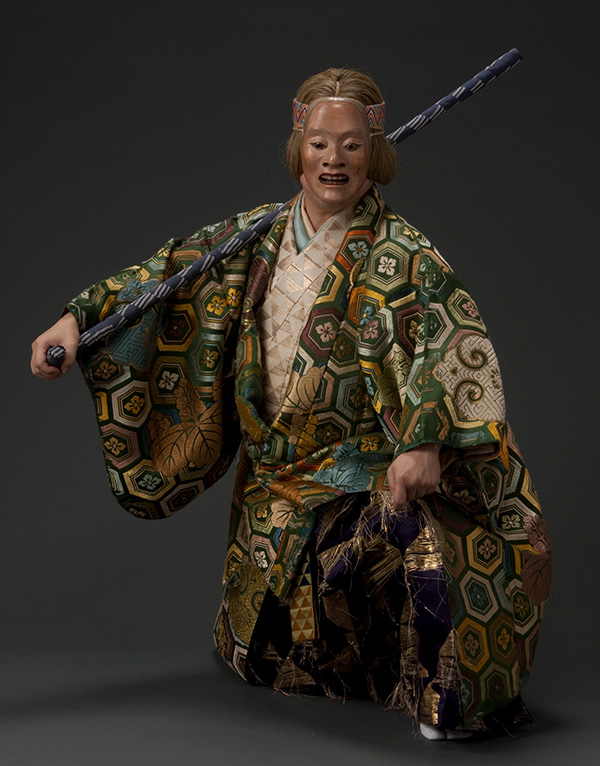
No.21
Atsuita
Atsuita is a costume made from silk fabric woven on a loom, similar to Karaori. It is characterized by its bold and large patterns.
It is worn in the “otubo-ori” style as the inner garment of the white lion of “Shakkyo” and the outer garment of “Yamamba.” Each design stands out against the green fabric creating a strong impact.
* This is a description of the displayed costume. It is different from the photo. (Photo: Example of costume used in Noh play “Yamamba”)
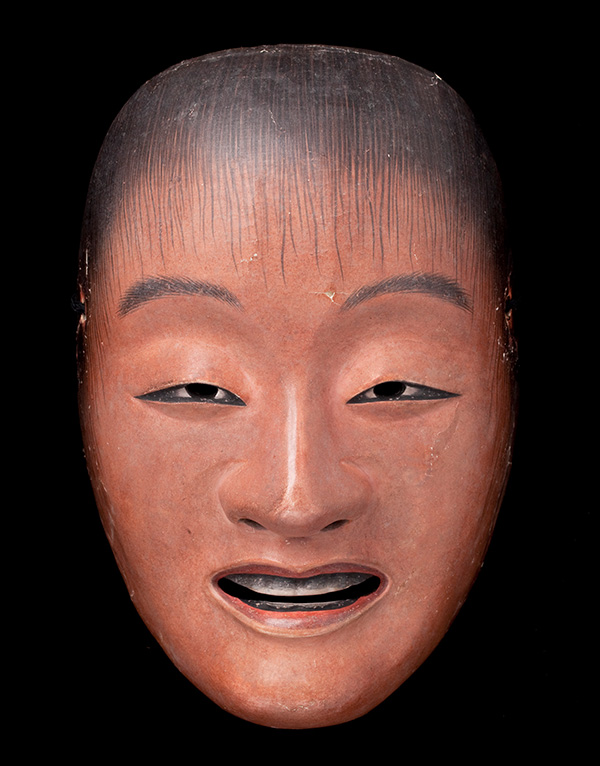
No.22
Shojo
A mask of the god of fortune who loves sake.
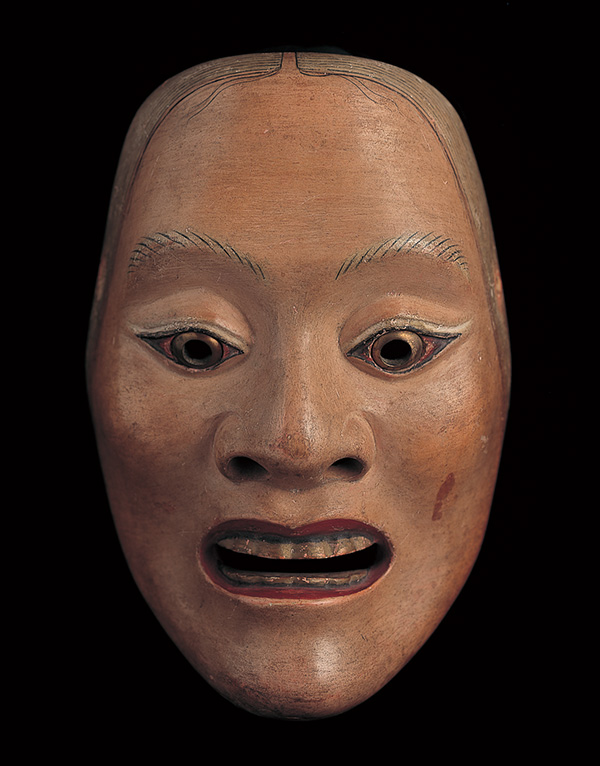
No.23
Yamamba
The mask of a mountain-dwelling demon woman. However, she is depicted not as one who attacks people, but as a mountain spirit who rescues them.
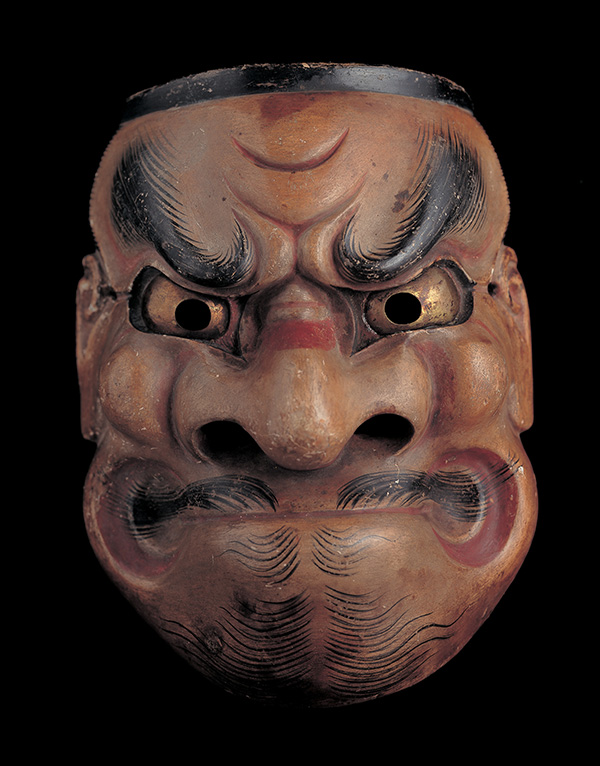
No.24
Obeshimi
A mask used for Tengu. Its distinctive feature is the uncut mouth, designed to enhance the power around the mouth.
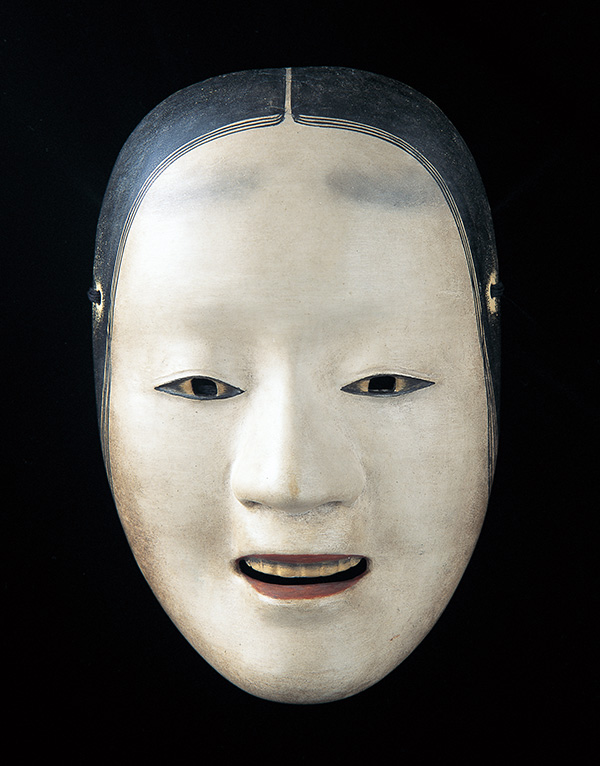
No.25
Deigan
A woman who should be beautiful, yet her expression reveals inner turmoil caused by anger and jealousy. The whites of her eyes and teeth have been painted with gold paint, giving her a frightening appearance.
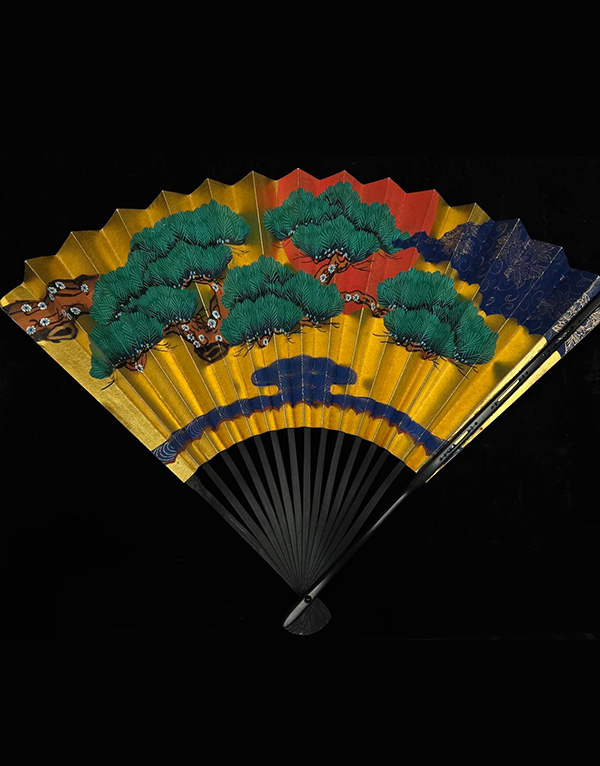
No.26
Kachishura Ougi
Used by victorious commanders. A picture of pine trees and the rising sun.
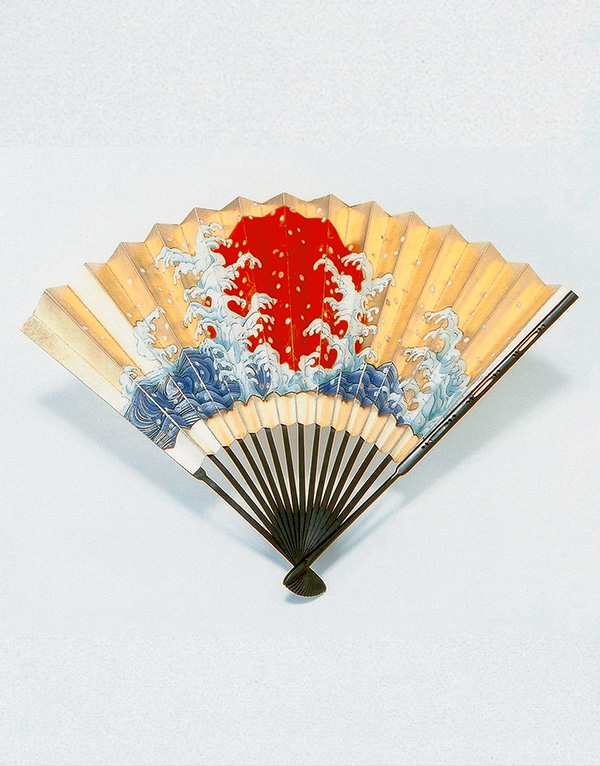
No.27
Makeshuraougi
Used by military commanders who are on the losing battle. A picture of the sun entering the waves.
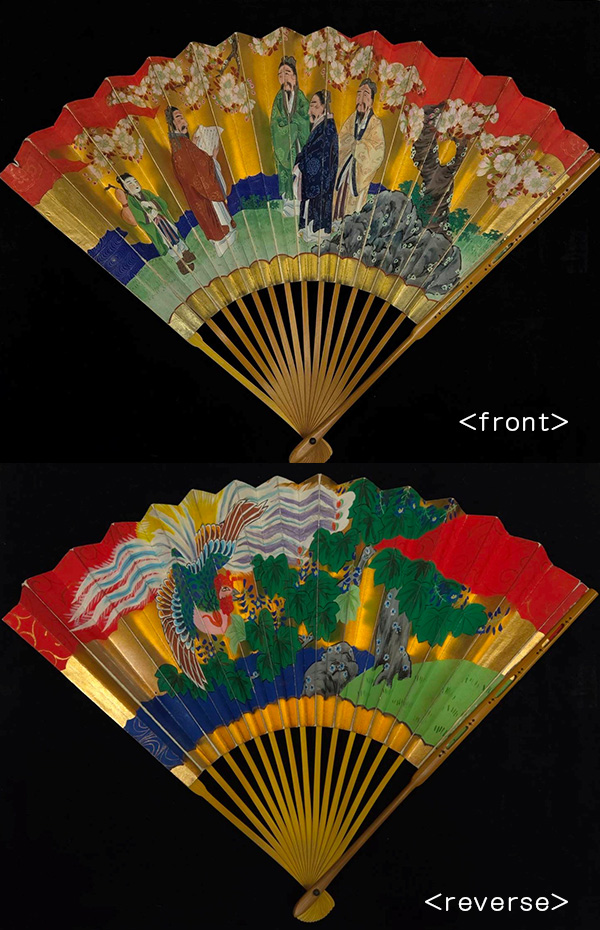
No.28
Kamiougi
Used by male deities.A picture of a sage of a bamboo grove. The reverse side is a picture of a phoenix.

No.29
Akagashira
Used for roles such as dragons and animals that are not human.
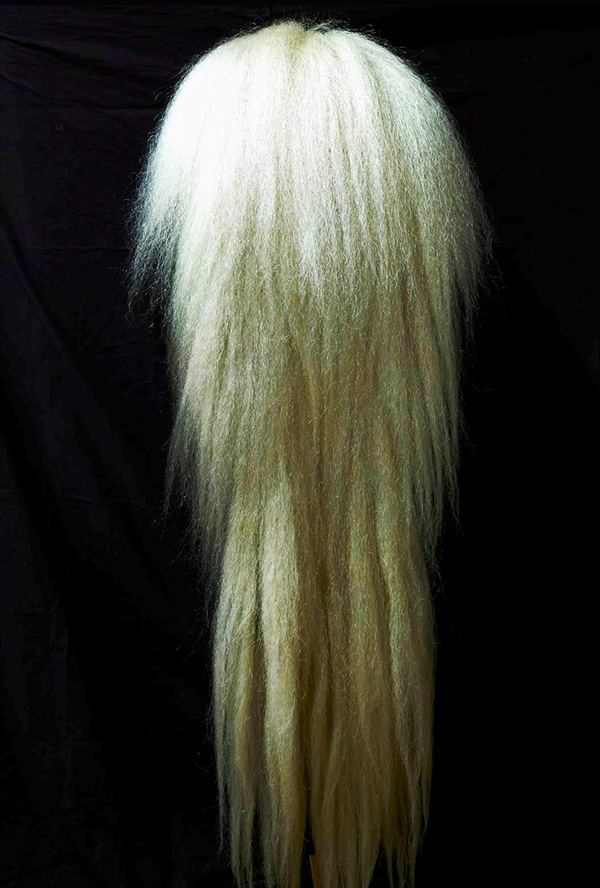
No.30
Shirogashira
Used for roles portraying more spiritual beings or elderly individuals.
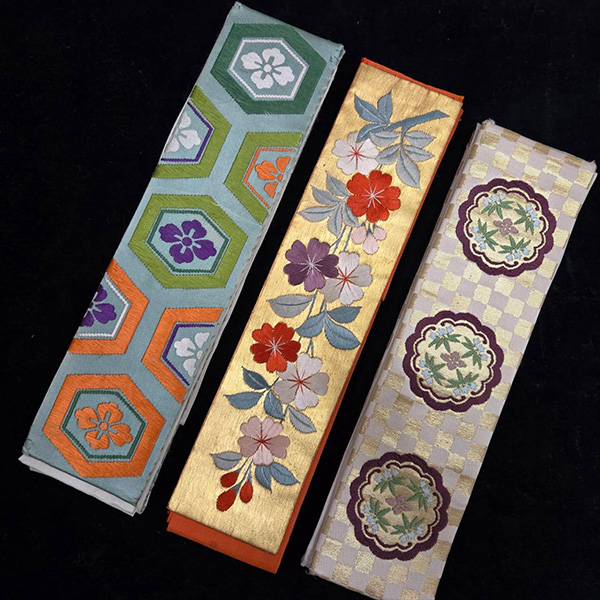
No.31
Koshiobi
The role of the sash that secures the kimono and the patterns drawn on it serve to emphasize the character’s image.

No.1
Tang Weave (Karaori):Red and White Alternating Goshoguruma Pattern (Konhaku Dangawari Goshoguruma Moyou) This fabric, worn by female roles, represents Noh costumes. It’s a pinnacle of craftsmanship, primarily made in Nishijin, Kyoto.
※This is a description of the displayed costume. It is different from the photo. (Photo: Example of costume used in Noh play “Yang Guifei (Yokihi)”)

No.2
Happi Coat (Happi): Dark Blue with Circular Dragon Pattern (Konji Ryu no Maru Moyou) Used for men’s jackets, often worn by warriors or dragon gods, symbolizing strength. It can be worn with the right shoulder exposed and is versatile.
※This is a description of the displayed costume. It is different from the photo. (Photo: Example of costume used in Noh play “Tenko”)

No.3
Long Silk (Choken):White with Phoenix Circle Pattern (Shiroji Houou Maru Moyou) Worn by goddesses and noblewomen, like Tennyo in feathered robes. Its wide sleeves are used for elegant dancing. When worn by noble men, it’s secured at the waist with a sash and has a decorative cord called “Tsuyu” hanging from the chest.
※This is a description of the displayed costume. It is different from the photo. (Photo: Example of costume used in Noh play “Hajitomi”)

No.4
Uroko Haku:Light Blue with Gold Scale Pattern (Asagiji Kin uroko Moyou) The isosceles triangular pattern, known as “scale pattern,” represents dragons, snakes, and demons. It’s frequently used for demon roles wearing Hannya masks.
※This is a description of the displayed costume. It is different from the photo. (Photo: Example of costume used in Noh play “Adachigahara”)

No.5
Old Man Mask (Okina Men):White Shikijou
Used in the “Okina” performance, fundamental to Noh. The smiling face of an old man symbolizes prayers for peace and national tranquility.

No.6
Old Woman Mask (Uba):
This is a mask representing an old woman. It has elongated eyes, wrinkles that show age, and a white hair design. Its gentle expression brings a sense of calm.

No.7
Woman Mask (Onnamen):Zo-Onna
This mask represents a noble and composed expression of a young woman. It is used for roles like celestial maidens in feathered robes, goddesses, and high-status women.

No.8
Ko-omote:
This represents the face of a woman slightly younger than a young Woman. The term “Ko” in “Ko-omote” doesn’t mean “small” but rather conveys a sense of “cuteness” or “endearing.”
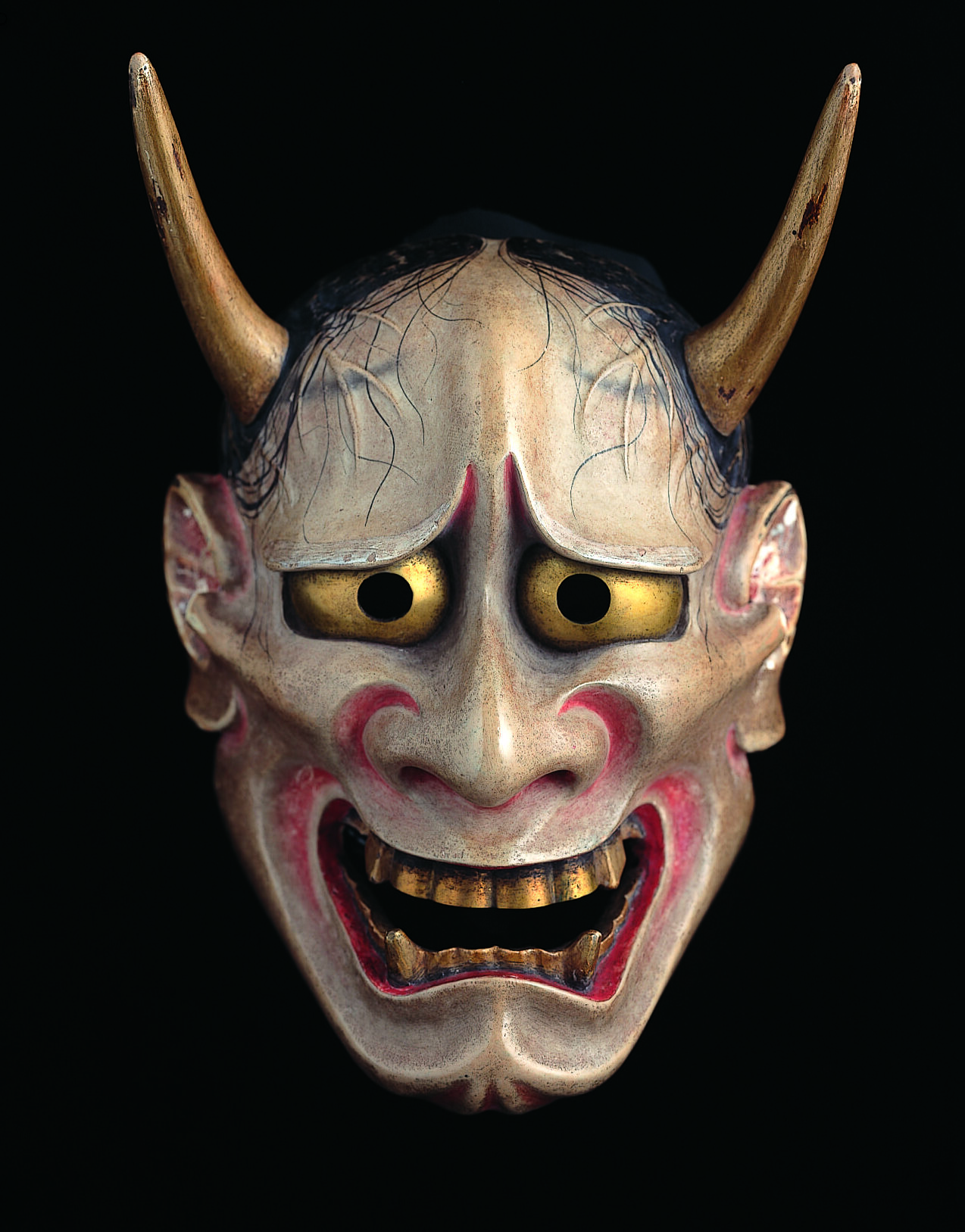
No.9
Hannya:
A famous demon mask. Represents a female demon, combining terror with expressions of sorrow.
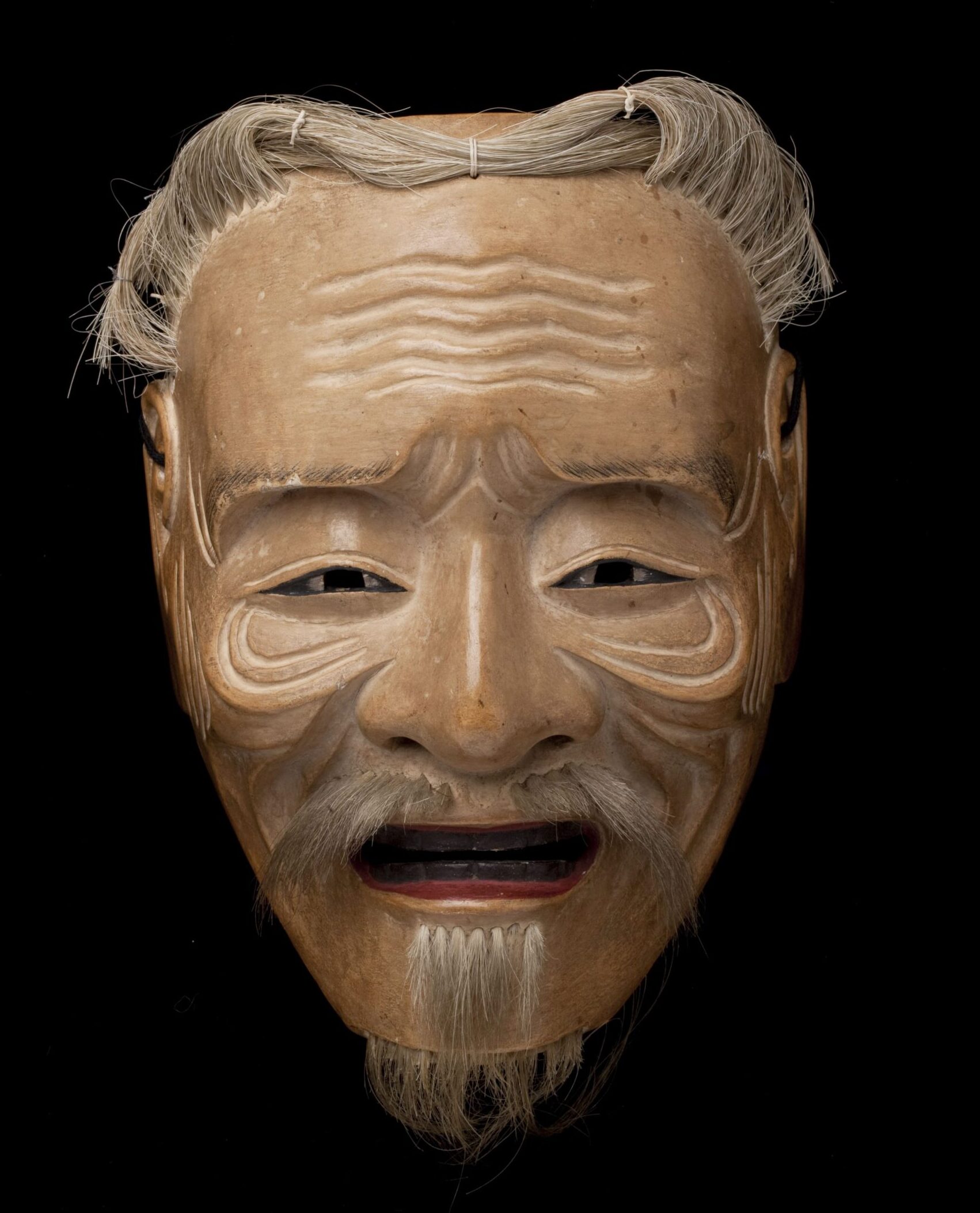
No.10
Laughing Elder (Waraijou):
A typical mask of an old man, characterized by a bearded face.

No.11
Gaunt Man (Yaseotoko):
A mask depicting a tormented ghost in hell. The hollow cheeks create a look that is both terrifying and sorrowful.

No.12
Lion’s Mouth (Shishiguchi):
Represents the brave expression of a lion, a spiritual beast serving Manjusri Bodhisattva.
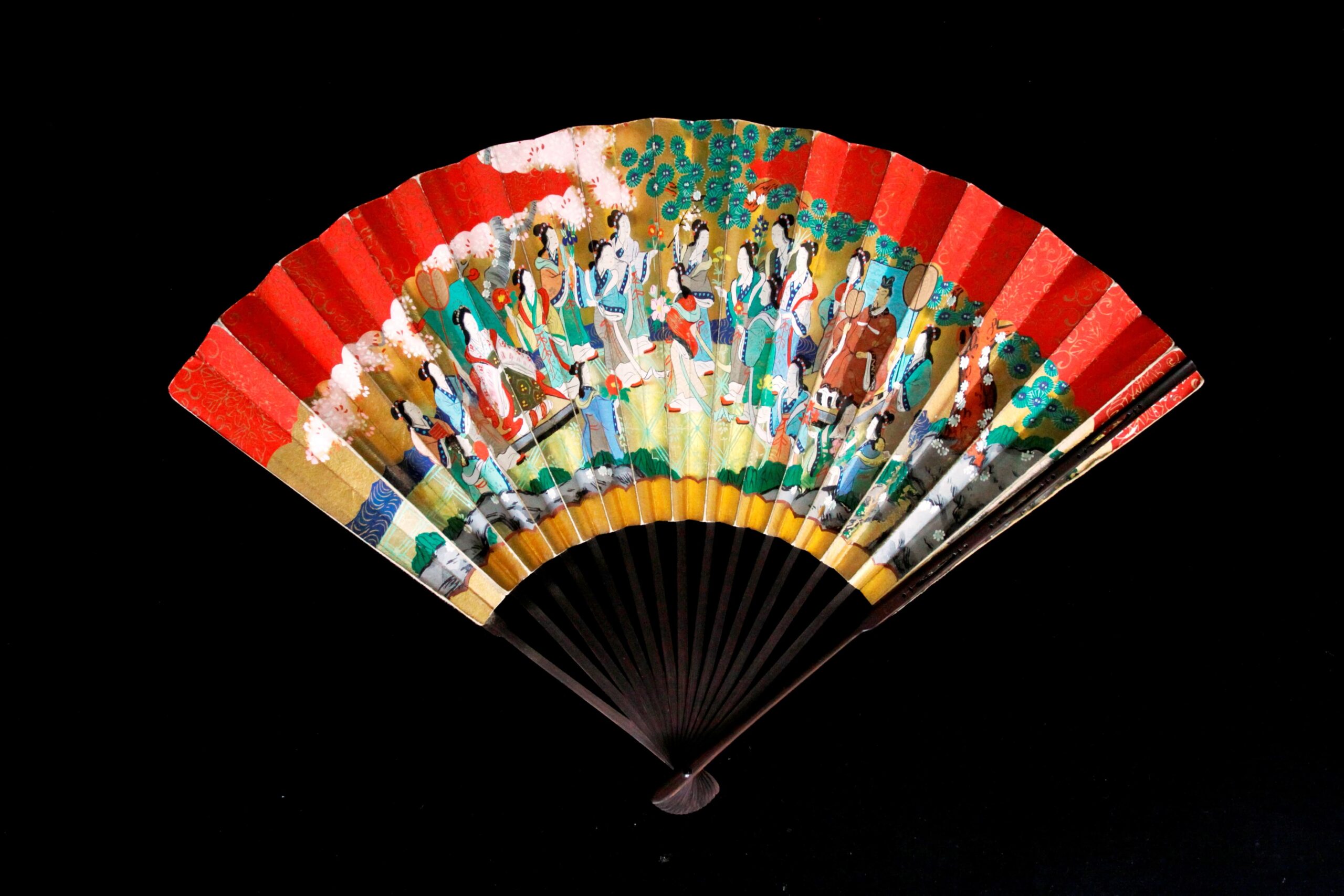
No.13
Fan (Ougi):
This fan, known as Chuukei, is wide even when closed. Called “Hanaikusa,” it depicts many beautiful ladies-in-waiting in front of the emperor and empress, and is an elegant fan.
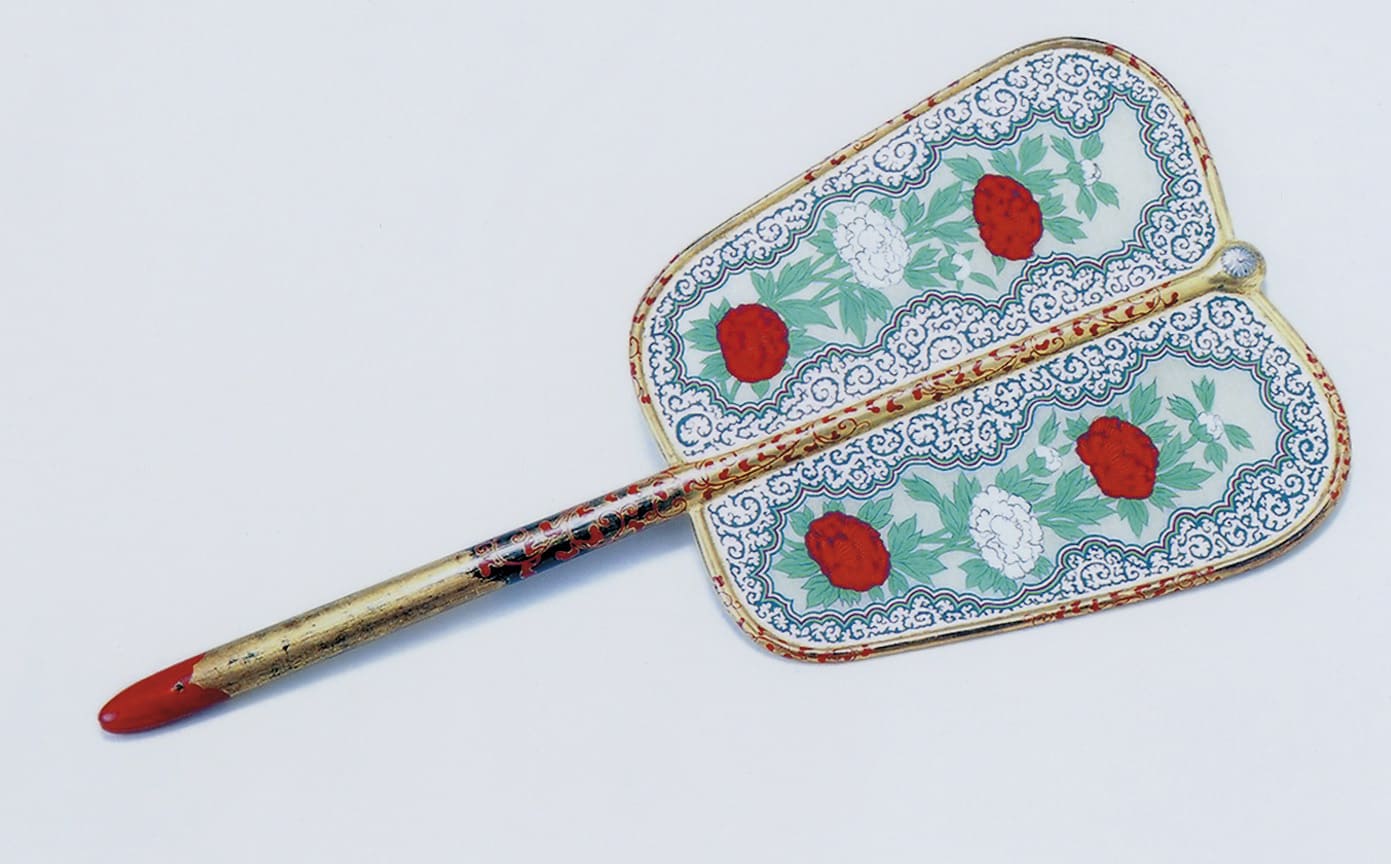
No.14
Chinese Round Fan (Touuchiwa):
For Chinese characters, a Chinese-style (Tang-style) round fan is used. It is held by emperors, immortals, or noble women like Yang Guifei. It symbolizes an exotic charm.
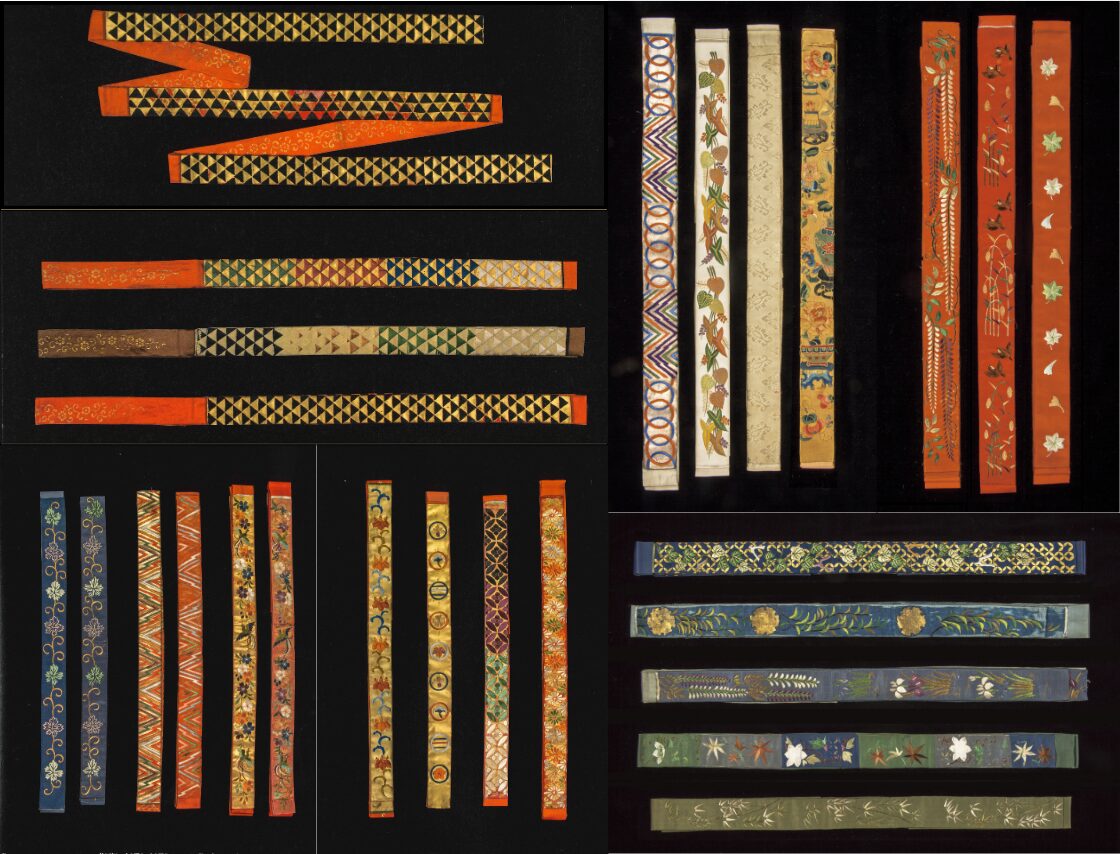
No.15
Wig Belt (Kazuraobi):
A belt-like hair ornament used with a wig, especially for female characters. The Shite (main role) uses one with gold leaf and embroidery. Other roles often use ones without gold leaf, just embroidery. Young women wear red belts, while older women use belts of colors other than red.

No.16
Embroidered Brocade (Nuihaku):Red with Sailing Ship Pattern (Akaji Hokakebune Moyou)
Nuihaku is a costume decorated with thread embroidery (Nui) and gold leaf placement (Haku). The pattern vividly depicts ships on waves.
※This is a description of the displayed costume. It is different from the photo. (Photo: Example of costume used in Noh play “Hagoromo”)
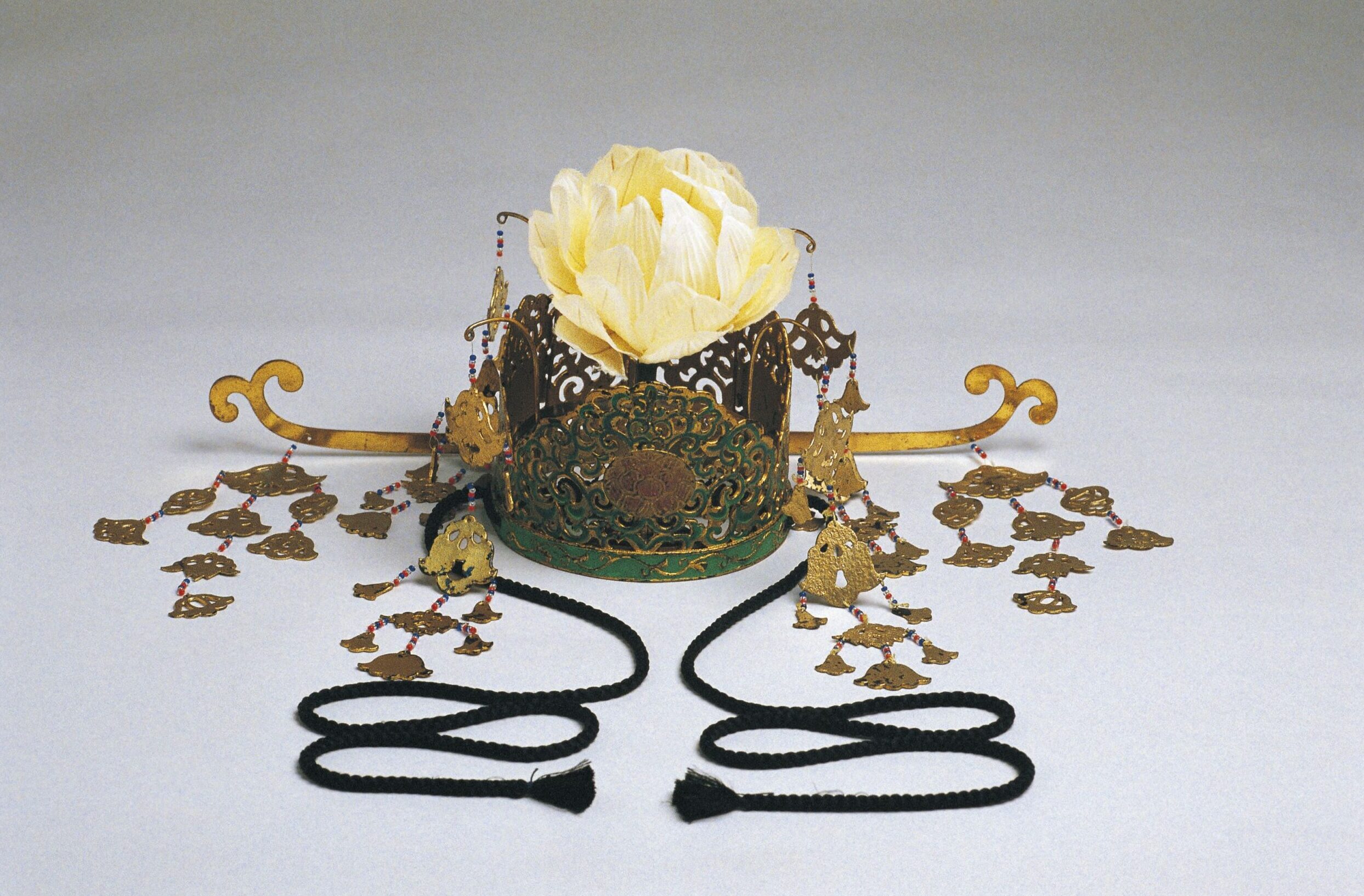
No.17
Crown (Kanmuri):Tengan
Resembling a Bodhisattva’s crown, it centers a phoenix, with hanging jewels and is elaborately crafted. Used for roles like goddesses and Yang Guifei.
Passing Noh’s Tradition to the Next Generation
The Yarai Noh Theatre is more than just a building. It is a precious space where you can feel the breath of Noh and touch its deep culture and history. We hope that Noh, a traditional Japanese art, will be passed down to future generations. We would be delighted if, through this exhibition, you discover the beauty of Noh and experience the moment when its charm captivates your heart.

主催:公益社団法人能楽協会、独立行政法人日本芸術文化振興会、文化庁
委託:令和5年度日本博 2.0 事業(委託型)